Monday, April 13, 2009

Seattle Hip Hop Spring Fest & Green Organizers Mixer


Green Organizers Mixer & Spring Hip-Hop Fest Saturday, April 18th at the UmojaFest P.E.A.C.E. Center

The Umojafest P.E.A.C.E Center's Green Light Initiative and the Race, Justice and Sustainability Project of Sustainable Central District and Sustainable South Seattle invite you and your organization to:

Justice Brunch! Green Organizers Mixer & Spring Hip-Hop Fest Saturday April 18th at the UmojaFest P.E.A.C.E. Center at 24th & Spring in Seattle.

The brunch will take place from 10am – Noon followed by a community celebration of Earth Week featuring live performances, speakers and community organization tables and vendors from Noon – 6PM.

Scheduled performers include Yirim Seck, KHMET, Razpy & The Vigilantes, Ayron Jones the Bluesman, Geneiva Arunga, Suntonio Bandanaz, Korvus Blackbird, Jamil Suleman, M. Famous, Garlandn Green, and other guest performers with music provided by DJ Kuhnex and Zecheriah the Barber and hosted by Wyking & G. Prez.

In celebration of Earth Week, this event is a networking opportunity for groups involved in environmental, sustainability, and justice work to meet, build relationships, and thereby expand the reach of our projects. All brunch participants will be provided tables to stay and share information about their programs.

Confirmed participants include: Seattle Pea Patch, Got Green, Clean Greens Project, Pursuit Of A Green Planet, African American Longshoremans Coalition, Life Enrichment Group, Hip-Hop Congress, Mothers Outreach Movement, Block Teamsters Union, Presidential Media Group, Mint Factory Clothing, The Nia Center, United For Youth Coalition, Association for Africentric Development, Feed The Body Teach The Soul and more.

Saturday, April 18th
10AM – 6pm
Umojafest P.E.A.C.E Center
2314 E. Spring St. (24th Ave & Spring St.)
Seattle, WA 98122

Potluck BBQ (No pork or soda please!).

PLEASE RSVP if you are able to bring something, volunteer or just coming to green@umojafestpeacecenter.com. The brunch has limited space. We look forward to seeing you!

The Green Light Initiative at the Umojafest PEACE Center focuses on the sustainability concerns that offer opportunities for our community to thrive. The group strives to make the resources of the green movement accessible and applicable while reclaiming our historical legacy of healthy and environmentally conscious living. Chair: Amber Croyle, green@umojafestpeacecenter.com.

The Race, Justice and Sustainability Project is an effort by Sustainable Central District and Sustainable South Seattle to build an action agenda at the intersection of justice and sustainability. Please click this link to fill out our brief questionnaire to share your experience and knowledge. Sustainable South Seattle and Sustainable Central District are volunteer-run community groups working to promote sustainability in our neighborhoods through project-based community engagement. For more information contact: Deric Gruen, Deric.Gruen@gmail.com.

Saturday, April 11, 2009

Early April Seattle Hip Hop News


Peace- I'm Julie C, Northwest Regional Director and Editor in Chief for an organization called Hip Hop Congress. We are a national 501(c3) non profit with the mission to provide the Hip Hop Generation and post Hip Hop Generation with the tools, resources, and network to create social, economic, and political change in their communities. Our key partners in this region include such Hip Hop artist, activist, and cultural organizations as 206 Zulu, Umojafest P.E.A.C.E Center, B Girl Bench, Global Fam, and others. We have 80 campus/community hubs across the country. We supplement and support the work of our campus chapters, partner businesses, youth service organizations, and media justice/independent media production groups through consultations, event organizing, trainings, youth programs, advocacy, social media strategy and/or just getting the word out the old fashion way.

You can be added to the Northwest Hip Hop Congress mailing list. I manage this list personally, and keep traffic very low, down to only one email a week, if that. What you will receive is consolidated updates on us and our partner's activities in this region, along with opportunities to plug into this movement. I hope you stick around, get a chance to read, and respond to some of the youth, artist and grassroots lead efforts happening in the area. If you have any questions, email me directly at juliec@hiphopcongress.com, or you can call me by phone at (425) 223-7787. Thank you and welcome! Enjoy the updates below.
-Julie C


------------------------------------------------------------------------------------------------------------------------------------------------------------

We start our update this time giving it up to an important member of the Seattle Hip Hop community, Gregory "GCL1" Lewis, and his new book. Gregory “GCL1” Lewis is an often under-utilized and underappreciated link between Seattle’s Hip Hop community and its movement potential. He plays a central role as a Shaka (security) for 206 Zulu and un-official advisor to many artists and activists in the Seattle area. He is also a martial arts instructor, soon to be competing in the 8th Annual Kyokushin Challenge April 18th in Bellevue, Washington at Eastside Christian School. Recently, a collection of his work from the late 1990’s was selected, translated to German, and published in a book by Gabriel of the Anarchist Publishing House in Hamburg. When GCL1 dropped through and showed me the book a few weeks ago, I wanted to take the opportunity to get some of his words down, and pass on some Seattle history to some of us younger folks. View and share the full article HERE!

Next theme we got is independent media, so let's start with a party. Coolout Network has been as a Seattle Hip Hop independent media institution for 18 years strong, and the following video by Coolout TV fan and notable videographer on his own right, Scott Macklin, is footage from the Coolout TV 18th Anniversary Celebration. It features Orbitron and Yze, Draze, Silver Shadow D performing with his son Keith, Gabriel Teodros, Sinsemilla, Lady Tazs, Glo Medina, and more! Sadly, as the video indicates, Scott’s camera fell casualty in the process of documenting the night. but rest assured that even at his own birthday and anniversary event, Mr. Georgio Brown was wielding his camera like a Samurai sword in battle, capturing every minute of the festivities. Be on the lookout for that!

Also, speaking of independent media and anniversaries, Reel to Real: Seattle's 1st Hip Hop Film Festival which went down during the 206 Zulu 5th Anniversary celebration, has inspired a "Hip Hop 'Mini-festival" at Langston Hughes African American Film Fest! They will be rescreening three of the movies from Real to Reel: B-Girl Be - A documentary that takes you inside the all female, all Hip Hop weekend at Intermedia Arts Center in Minneapolis, Who is 206 Zulu? - by Georgio Brown, and Masizakhe by Scott and Angela Macklin of Open Hand Reel. If you missed it the first time, or just need more, don't sleep! For 2009 Langston Hughes Black Film Fest Schedule Information, click here.

In keeping with the media vein, check these musings I rattled off in "A New Era in Hip Hop Cultural Production: What the collapse of the music industry means for artists." It was recently published in the April Issue of the People's Tribune, a Chicago newspaper with national distribution, along with articles from other Hip Hop Congress partners from across the country in a two page spread. Anyone who wants a paper or a stack, I have 200 copies at my house, so give me a call (this issues mentions include Suntonio Bandanaz, Hidmo, Umojafest P.E.A.C.E Center, and more! HHC will have regular access to these pages and hopefully more in the future, so please send any articles on Hip Hop organizing and political action my way. Those interested in being involved with the Hip Hop Congress media coalition, please reply this email and hit me up as well. We're in the planning and development stages.

Hip Hop Congress is also planning to optimize it's network and coalition growth potential for the Northwest at its 2009 Annual Conference to take place in Seattle, Washington from July 29th to August 2nd, in partnership with Umojafest, Universal Zulu Nation, and Dope Emporium, so it's a critical time to reach out and get down right now! Meetings will be commencing with key partners as soon as next week!

-----------------The Bullet Point News-----------------

* Knox Family is performing this Sunday April 12th at the High Dive, 513 N 36th St, Seattle, WA! Come see me rap, too.

* The following Saturday, April 18th, Umojafest P.E.A.C.E Center is hosting "Union Spring Fest," block party style from noon to night, on the corner of 24st and Spring St in the heart of Seattle's Central District, with DJ's OMG and Kuhnex, and performances from Yirim Seck, Rapzy and the Vigilantes (young HEAT in the town, if you don't know, now you know), Geneiva Arunga, and more. Come and celebrate the development of Seattle's very first autonomous Hip Hop youth service and community organizing center in history!

* Speaking of Umojafest P.E.A.C.E Center, co-founder Wyking's presentation at "Keeping it Real, Keeping it Green" a Green Festival panel of the role of Hip Hop organizing in the green movement was met with great enthusiasm, so look out for footage on the event soon. Find out more about the Umojafest P.E.A.C.E Center's green initiatives at the website, and come through to Sunday meetings at 4:00 to find out how to plug in.

* Hip Hop Congress in Seattle is teaming up with other community groups to support the MAJOR May 30th March for Healthcare this year that will start at 12:30pm at Pratt Park in the Central District. "Welcome to the website for Washington State's largest Health Care Rally EVER. We're gearing up with over 40 organizations (and growing every day) to build the largest ever grassroots mobilization pushing for health care for all and fighting for to win ! " Read more at the link above. Thanks Sunny!

* Thank everyone for their heartfelt reactions to the Hip Hop and Domestic Violence article. I got comments and contributions from women (and a few men) from all across the country. I am so overwhelmed by what everyone had to say either on facebook, email, by phone, or face to face in response, and what everyone is doing in their communitites, there's got to be some next steps on this! I will follow up with each of you soon.

* Much love to members of the BAYAN Regional organizations, PINAY SA SEATTLE and ANAKBAYAN along with other solidarity organizations who recently got back from repping the Northwest at the 3rd Congress of BAYAN-USA and the founding and first assembly of GABRIELA-USA in Los Angeles. We applaud your work in solidarity with the universal struggle for human rights.

* Hip Hop Congress National Partner the Poor People's Economic Human Rights Campaign and HHC's Kentucky spearhead Women in Transition were featured in a New York Times article entitled "With Advocates' Help, Squatters Call Foreclosures Home".

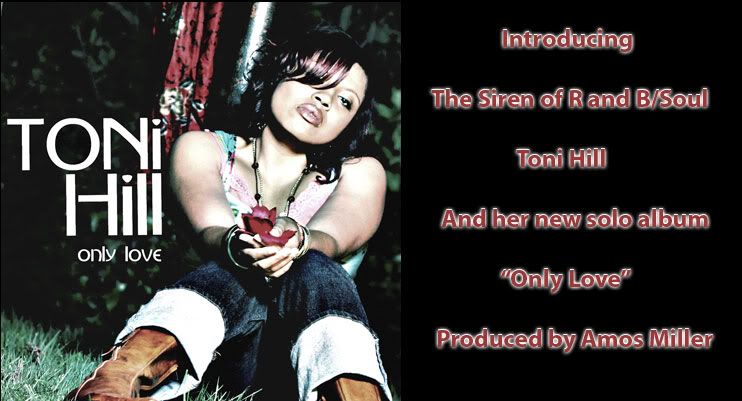
* Toni Hill's new album, "Only Love" is now available for download on iTunes, as well as Amazon, eMusic, Media-Net and Napster. Physical copies are available at Sonic Boom on Capitol Hill and Silver Platters in Queen Anne and Northgate. Check Toni's new video "Rose" on Youtube.

-----------------------------------------------

Okay, although that's far from all, I'll leave you all here for now.

Stay in touch.

Friday, April 10, 2009

A New Era in Hip Hop Cultural Production: What the collapse of the music industry means for artists.

The Hip Hop artist base hasn’t stopped exponentially growing since the inception of Hip Hop culture. Even as the corporate industry fragmented and com-modified Hip Hop’s artistic practices for economic gain, our numbers grew. When consolidated media misrepresented and defamed our name and value, they grew still. As we learned to navigate the information age, we developed ways to get around every barrier thrown in our paths. As we matured, we started teaching classes, running youth programs, and doing element workshops all over the globe, laying down the blueprint for a whole next generation of Hip Hop cultural producers we are now responsible for. In the era of Twitter, Myspace, Facebook, Internet radio and digital downloads, this burgeoning artists base is now not only intrinsically connected by its interests and practices, it is intricately networked, and rapidly developing a powerful collective consciousness.

As the music industry continues to struggle for life, the majority of Hip Hop’s artist base (those of us who rely on a day job or side hustle to sustain our creative endeavors) stand at its deathbed like battered children, mourning an extremely abusive parent. Some of us harbor denial, anger, and regret, others are confused or indifferent. But what we should be clear on now is one thing: the strength of one’s network and one’s ability to maneuver it determines the amount of resources at one’s disposal, and this simple truth leaves us with quite an inheritance if we’re clear.

As independent Hip Hop artists, we’ve learned to navigate around the corporate industry by gaining a wide range of skill sets in a number of overlapping sectors including technology, communications, education, social entrepreneurship, and more. We are an army of highly skilled soldiers, with the ability to develop community-owned alternatives to Sound Exchange, coalitions of Hip Hop broadcasters, media producers, and journalists, teaching hip hop artist unions that advocate for fair wages and healthcare. We have the capacity to really change the game. But for this to work, we gotta cut off life support to the old industry model, and move on. We have to go from asking, “How do I get a break in the industry?” to asking “How do we create a situation where the most deserving (in terms of skill, grind, and contribution) independent artists can get the maximum profits for what they do (be it shows, sales, panels, workshops, whatever) at any given time?” We have to change how we shape our organizations, record labels, businesses, and how they relate to each other as well as changing how our artist selves interact with our day job selves inside our own mental paradigms.

We also have to recognize that the industry’s death and our survival as artists is not a passive process, it’s a battle front. As legislation on internet broadcasting, royalty collection, and online music sales continues to pass through Congress, the corporate industry, like a zombie, attempts to infect and control the policy shifts through groups like the RIAA and Sound Exchange. While this is going on, DC-based advocacy organizations that originally popped up to oppose this corporate agenda have developed their own interests to protect. These get tied into the nonprofit industry that has sprung up around the media reform foundation base and the new hip hop foundation base, and the mess that results is a matrix that sucks in and eats artists and activists, leaving confusion or indifference in its wake. Sun Tzu said a confused army always loses. In the case of Hip Hop artists, our confusion leads to crabs in a barrel, reinvention and/or spinning of our wheels, or simple ye’ old community fragmentation. We can’t afford any of that anymore. Now is the time to pull the plug, kill the noise, and organize the movement.

Seattle Hip Hop's Minister of Information: Gregory "GCL1" Lewis

Gregory “GCL1” Lewis is an often under-utilized and underappreciated link between Seattle’s Hip Hop community and its movement potential. He plays a central role as a Shaka (security) for 206 Zulu and un-official advisor to many artists and activists in the Seattle area. He is also a martial arts instructor, soon to be competing in the 8th Annual Kyokushin Challenge April 18th in Bellevue, Washington at Eastside Christian School.

Recently, a collection of his work from the late 1990’s was selected, translated to German, and published in a book by Gabriel of the Anarchist Publishing House in Hamburg. When GCL1 dropped through and showed me the book a few weeks ago, I wanted to take the opportunity to get some of his words down, and pass on some Seattle history to some of us younger folks.

These writings were taken from Black Autonomy, a national paper with roughly 1-2,000 distribution. Black Autonomy, initiated by Lorenzo Komboa Ervin, a former Black Panther, former SNCC member, political prisoner, and author of Anarchism and the Black Revolution, began as a joint project of activists from New York, the Bay Area, Detroit, Seattle, and D.C, to report back on community actions and put forward a new revolutionary agenda. “The message we all wanted to convey was that Black people are fighting back and that real leadership is either collective or by example. You can’t wait for a messiah to come and save you,” says GCL1, who put up the money and launched it out of Seattle in 1993. It was published every two months, but after four years, contributors fell off, and feeling like the paper wasn’t reaching the audience it needed to reach, GCL1 finally stopped bearing the financial burden.


(Photo: GCL1 helping emcee Sista Hailstorm "kick" her smoking habit at a demonstration)


“The first time I got involved with Hip hop was 1983, I was in middle school, the scene at that time was violently competitive, so I stepped back, got involved with the metal and grunge rock scenes for a while,” recalled GCL1, who got into activism and movement work in the early 90s because of several factors. “ ‘92 was a big year for direct action against reactionaries and the state,” GCL1 remembers with a laugh. “I moved to the University District, which had a large and highly politicized homeless youth population at the time. They were protesting Mark Sidran(former city attorney for Seattle) and taking over vacant buildings, and I got in with them.” It was there that he learned about Marxism, anarchism, and other various national liberation movement ideologies. In addition, the original George Bush was invading Iraq, and Seattle was seeing some of its biggest protests since the early seventies, including one that blocked freeway traffic on Interstate 5. The city also experienced two nights of Rodney King related burning and expropriation in the downtown business district and on Broadway. “We marched from City Hall up Pike by Seattle Central chanting ‘Wait ‘till Dark!’ As the sun set, the first burning dumpster was pulled out into the middle of Broadway. It was ‘on’ after that,” he recalled.

Neo-nazis were attacking homeless kids, people of color, and gay people. “On Christmas eve of ‘92 Nazis stabbed a Black man on a metro bus on the Ave. We marched from University Heights to an abandoned building behind Dick’s on Broadway the nazis occupying and using as a base to sell heroin and recruit members. Armed with sticks, baseball bats, knives, and brass knuckles, we went into their house, and started going to town on them. My favorite moment was when the Crips and other hood cats came out with tire irons and their fists to fight along side us. The nazis cleared that spot out quickly.”

GCL1 also did prisoner support work for Mark Cook, a member of the George Jackson Brigade, an armed anti-imperialist group that were active from 1970 to 1979, and founder of the Black Panther Party chapter at Walla Walla State Penitentiary. GCL1 was also a co-founder of the Seattle Mumia Defense Committee and Seattle Leonard Peltier Support Committee.

GCL1 drifted back into the Hip Hop scene in the early 90’s, during the tail end of the Golden Era. “I met Specs One, Silver Shadow D, Merciful, Jace and the 4th Party, Amilcar Navarro from Union Of Opposites, and many others,” said GCL1, who had just turned 21, became a bouncer, and was coming to know and admire the work of many local artists in the scene. “In ’93 I met Merciful at Seattle Central and he turned me on to the struggle for Coleman School and the African American Heritage Museum and Cultural Center in the Central District. Through Merc, I met Omari, Wyking and others who gave me more education on Nation of Islam, the 5% , the Black Liberation Movement, etc. Merc introduced me to most of the Hip Hop community.”

GCL1 attempted to get activists from the North End involved with the struggle in the Central District, but was often met with indifference or outright hostility. It seemed to GCL1 that although the white activists would go to various church congregations seeking support from the Black community for their agenda, they didn’t want to see Black people with real institutionalized power and therefore would not support a Black-led organization or its agenda.

GCL1 turned his energy to co-founding Copwatch 206 with dRED.i’s Merciful, being active in the AAHMCC struggle as a board member, participating in the WTO protests as a member of the Seattle IWW, and emerging victoriously from both a physical and legal altercation with the Seattle Police Department and the City of Seattle in which he used his karate skills to save his own life from a murder attempt at the hands of a police officer.

“Seattle Hip Hop connected me to people of all walks of life, made me feel like I was part of something bigger than myself,” says GCL1, “Hip Hop is a lot more fun than the chore of activism; a lot of the people in the ‘movement’ are unpleasant people, unhealthy, negative, and cynical; Hip Hop is generally more outgoing and hopeful, and social. Hip Hop is going to teach the activists how to relate better to the people. It is up to the activists teach the Hip Hop heads how to be more disciplined, organized, and analytical. Hip Hop also provides the soundtrack to the revolution.” (Photo GCL1, left, with King Khazm, Chapterhead of 206 Zulu)

But GCL1 also has his frustrations with the community. “In Hip Hop, I see a lot of people saying one thing and doing another, not following through on what they say, and treating others like pawns. The big lesson is that the people you meet on the way up are the same people you meet on the way down. Treat everyone with respect, and if they aren’t worthy of respect, take them off the planet. If you’re not willing to do that, then you must respect them. You don’t have to like someone to respect them. How is it we can hold our nose and deal with people we don’t like at our day jobs, but we can’t learn to work with people we may not like within the Hip Hop scene?”

When I prodded him to apply some of the organization and leadership theories from his book to Hip Hop organizing, he responded, “Hip hop is currently not organizing for revolution, it’s organizing for reform. They don’t want to transform the world; most are only interested in transforming their own individual economic situation. People keep doing things to replicate and reinforce the current political system of capitalism and white supremacy. The currently accelerated collapse of the capitalist economic system is the best thing that can happen for revolutionary progress, yet most fear the final outcome of this. We must be the ones to shape the final outcome!”
(Artwork by Daniel Strzelczyk)

On the role of hip-hop activists operating in the community, he said, “What really separates us from the Masons, the BoulĂ©, Skull and Bones, and all these secret society types is being upfront about who you are, your agenda, and what you do. Anything else is rank opportunism and deception of the worst kind.” GCL1 continued, “There’s always a hierarchy of knowledge. Nothing is unknown, people are just unaware, indifferent, or unable to synthesize and move forward with the information they have. Those of us who know have a responsibility to teach those who do not know.”

For GCL1, the intersection between Hip Hop and movement work is not just the message in the music, it’s his community and his life. “I don’t do activism ‘cause I enjoy it, I’ve never enjoyed it, I do it because I know it’s needed and necessary. If I don’t do something the universe will punish me. That’s not just a belief, I’ve seen it happen. Indeed, it’s happening now.”

For more, check these articles GCL1 on Illvox.org:
"Session Notes: Self-Defense"
"Mythology of the White-Led “Vanguard”: A Critical Look at the Revolutionary Communist Party, USA"
"Use No Way As A Way: An Interview with Gregory Lewis"

Friday, March 20, 2009

Thoughts on the Movement Potential of "Women in Hip Hop"

These thoughts flowed forth from reading Bakari Kitwana’s “A Hip Hop Response to Chris Brown and Rihanna.” Kitwana’s basic premise was that the Hip Hop political organizers could transform this incident into an opportunity by launching a public policy campaign around domestic violence. This got me to thinking about the issue, the Women in Hip Hop surge, and whether or not this is evidence that such a campaign could be effective.

Hip Hop needed its woman’s movement, and the last few years have been a blast. We needed our voices heard. We wrote books, dropped albums, made documentaries, launched initiatives, built youth programs, nonprofit organizations, conferences, shows, support networks, and Hip Hop Association even declared 2008 the “Year of the Woman in Hip Hop.” It was inspiring. I don’t know how many records or books it sold or how many careers it launched, but I know we all got a little more press. I also know that programs were funded, stipends were dished out by universities, and all of a sudden, everyone wanted a token woman in Hip Hop at their fund raising dinner. I also know that women who were the most active in their communities realized there was a whole network of sisters doing just the same all across the world, all because of this “Women in Hip Hop” spotlight. Was it self-empowering? Yes it was. Did this at all have an impact on domestic violence numbers? I’m guessing not at all.

The reason we have fallen short on impacting public policy is because we let misogyny dominate the conversation. It’s not exactly our fault; many of us didn’t know it was happening. Journalists wanted to know what parts of ourselves we were sacrificing to be in Hip Hop, feminist and women organizations wanted us to generate youth interest, colleges wanted us to speak on the subject, and we were caught off guard. But now we have to come back and face the consequences. In the field of the Hip Hop movement base -the artists, the hood, there are places where this conversation has not only alienated our male counterparts, its reinforced divisions between organizations and individuals on the local level, and even blocked open honest dialogue on sexuality and relationships amongst women ourselves. Here is why:

Liken misogyny in Hip Hop to domestic violence in relationships. Now, look at the detrimental impact that compartmentalizing the issue of domestic violence has had on families, especially in the case of people of color and immigrant communities in the criminal justice system. I was in court earlier this week and a Bosnian woman crying while pleading the judge to release her husband in custody. She said, “In my country when you call the police, they help. Here they don’t listen.” It’s also been show that public financial assistance programs also have divisive consequences in the relationship of parents, reinforcing a negative cycle of unhealthy relationships. Thus, the human rights advocacy and service provision framework that centralizes women as victims of either her partner’s abuse or his inability to provide is unhealthy because it is divisive in real life application. Likewise, focusing on misogyny is incorrect for the Hip Hop movement base because it removes real life women artists and activists from their relationships, family, and community context.

While I agree that Americans need to think change their thinking about dating violence, domestic abuse and gender equity, we need a holistic, empowering approach to reach the masses and address the root causes. For women in Hip Hop, in the context of the broader movement, this means refusing to let the misogyny and domestic violence discussion further criminalize our brothers, sons, cousins, and fathers, who are already either disproportionately imprisoned, or out dying on the streets. For a Hip Hop public policy initiative on dating and domestic violence to make real changes, we can't replicate the flaws of the criminal justice system and the state. We need to turn our energies toward healing our families and communities as one.

Thursday, March 19, 2009

Hip Hop Congress, Explicit Ills takes a stand for Economic Human Rights

The Poor People’s Economic Human Rights Campaign and Hip Hop Congress are collaborating to promote the award-winning film Explicit Ills, which features an all-star cast including Rosario Dawson, Tariq Trotter (Black Thought of The Roots), and more. The story is about poverty, drugs, and the healthcare crisis in the United States, and is centered on a sick boy and the community that rallies behind him. But unlike many movies on this critical issue, Explicit Ills doesn’t stop at simply portraying, or even analyzing the complex dilemmas people are faced with. Explicit Ills chronicles the real beginnings of a movement led by the poor for Economic Human Rights, and shows how any community can channel their energies into making real change. Check the trailer here.

Mark Webber, writer and director of Explicit Ills, is the son of Cheri Honkala, internationally renowned human rights activist, and executive director of the Poor People’s Economic Human Rights Campaign (PPERC). Cheri’s reputation for getting the job done is driven by her action-oriented tactics which include housing and capital building takeovers, building “Bushville” homeless encampments all the over the country, and organizing tens of thousands of poor people in protests for the past three Republican National Conventions. At the 2008 RNC, Hip Hop Congress teamed up with PPEHRC, Rosa Clemente, and many others to unify thousands in The March for Our Lives through the militarized streets of Minneapolis. The march also included students from Hip Hop Congress’s Evergreen State College Chapter and HHC’s Portland head and emcee, Mic Crenshaw. Explicit Ills ends with a scene reminiscent of that march, where movie characters and KWRU and PPEHRC members, leaders, and friends march through the streets of Philadelphia demanding healthcare and other Economic Human Rights. “Working with PPEHRC to get the word out about Explicit Ills is a great opportunity for us,” said D’Labrie, HHC National Outreach Director, “We are trying to get out an important message: that Hip Hop has always advocated for healthy communities, health care, and economic justice for all.”

“What you have in Explicit Ills, the story of the boy, is the fictional depiction of a social catalyst, something that creates a surge of energy from the people, something we are experiencing more and more in our own backyards due to the state of the economy,” said Julie C, HHC’s Northwest Regional Director, “But the question then becomes who is channeling those energies where and why? If we’re not clear on the political undercurrents, our direction as artists and organizers is always with the wind. This is why relying on the star power of Hip Hop celebrities has never been an effective strategy for building a Hip Hop movement. It’s superficial. But cultivating our own networks to get around the distractions, that’s power. That’s Universal Zulu Nation, Hip Hop Congress, Silicon Valley Debug in San Jose, Global Fam in Portland, the Umojafest P.E.A.C.E Center and Hidmo in Seattle, J.U.I.C.E in Los Angeles, the Hip Hop Chess Federation in the Bay Area, Mississippi Artist and Producer’s Coalition in Jacksonville, Women in Transition in Kentucky, IMAN in Chicago, that’s a movement. Now, how do we all move as one to create some real changes?” Suntonio Bandanaz, Northwest Outreach Director for HHC added, “The more awareness people have that Hip Hop is actually already a part of this movement, the closer we get to realizing our strength. Hip Hop is not just a bunch of words and rapping [be it on tracks, in the classrooms, on panels, online, or in the magazines], it’s action and community.”

As Hip Hop Congress continues to build towards its 2009 National Conference in Seattle, Washington July 29th- August 2nd, the organization plans to utilize Explicit Ills in education and outreach, and their partnership with Poor People’s Economic Human Rights Campaign as a part of their ongoing mission to provide the Hip Hop Generation and the Post Hip Hop Generation with the tools, resources and opportunities to make social, economic, and political change on a local, regional, and national level.

For more on Explicit Ills, including cities and screening information click here.

Thursday, March 5, 2009

Seattle Hip Hop Community Tackles Tough Issues at NW Hip Hop Leadership Conference

"Approximately 200 people came out from across the greater Seattle Area to participate in the 1st Seattle/NW Hip-Hop Leadership Council on Saturday February 28th at Seattle Central Community College," wrote Wyking, co-convener of the event, "presented by the Seattle Hip-Hop Summit Youth Council, Bush School Diversity Speaker Series, UmojaFest P.E.A.C.E. Center and Seattle Central Community College Black Student Union, the conference provided a wealth of information beginning with history and socio-cultural analysis related to the hip-hop generation." Okay, so I was only able to attend one part of one panel, but I still gotcha covered. Here are the highlights I was able to collect from the comrades. Shouts out to Suntonio Bandanaz, Rajnii Eddins, and Toni Hill for helping me piece this together. Also, be sure to check out the rest of Wyking's write-up as well. If you missed this one, don't worry. We're about to set it off at the 2009 Hip Hop Congress National Conference in Seattle, Washington with Dope Emporium, Umojafest, Hidmo, 206 Zulu and more July 29th-August 2nd! More to come.


The Hip Hop 101 presentation was led by Silver Shadow D, Rajnii Eddins, and Suntonio Bandanaz.The 206 Hip Hop vets opened the discourse with a mini open mic of sorts, with participation from one young man and two sisters in the crowd. The discussion then moved to the basics: roots of hip hop culture and violence prevention, and Universal Zulu Nation, the inception of the music industry, and the progression of the movement behind the culture. Naturally, the dialogue progressed to the domination of the corporate industry, its role in undermining the political aspects of the Hip Hop movement, and connection of such interests to Cointelpro through entities like Interscope Records and more. “We went from Fight the Power to Reclaim the Media, basically,” said Bandanaz, “to return to the founding principles within culture’s art forms.” Suntonio Bandanaz and Daichi Diaz from Alpha P also dropped by KSER 90.7 community radio in Everett for an interview on DJ Nanino’s Boombox FM later to promote their March 18th show at Studio Seven featuring Spaceman, Specs Wizard and more! Be sure to check Daichi’s new vinyl “The Fight Lullaby.”

The next panel, Hip Hop the New Face of Racism, was a community discussion, which included photographer Inye Wokoma of Ijo Arts, the conference keynote and author of How to Hustle and Win Supreme Understanding, Aisha B from Lakeside School Hip Hop Congress, Charys Bailey, Tacoma artist and youth mentor, and others.The discussion evolved to the questions, what happens when a culture becomes an industry, how does the corporate Hip Hop industry cater to white people’s perception of who Black people are, and what is the impact of that on racism and racial identity? One student spoke on how while her friends listened to conscious Hip Hop, they still had a hard time dealing with and recognizing white privilege. According to Raj, the dialogue that followed reflected personal experiences on the complexity of institutional and systemic racism and white privilege. A social worker spoke on the immense caseloads and rigorous data entry that supersedes effective service provision, a doctor spoke on the lack of people of color amongst his colleagues, a mentor spoke on how policies in youth detention centers interfere with young people’s ability to talk and internalize their experiences. Others spoke about the subtly of racism in Seattle, and the difficulty of addressing it without being labeled as an ‘anger black person.’ Supreme Understanding brought up the need to give people strategic tools and to make solutions concrete so they have practical applications in combating racism.

Rajnii also did his best to help me piece together a quick summary of the next panel, From the Hood to the Club, Violence in Hip Hop. This presentation featured Kun Luv, Omari Tahir-Garrett, Supreme Understanding, Gregory Lewis, Merciful, and Ted Evans and was moderated by Wyking. When Raj came in, Merciful was asserting the importance of addressing the root causes of youth violence, and illustrating the role police play in criminalizing and antagonizing Black youth through militarizing communities. He also spoke on young people acting out on that misplaced aggression, and how that contributes to the overall environment of the neighborhood by having communities turn in on each other. Kun Luv took issue with the claim, saying that most of the violence taking place in Seattle now comes from someone having a beef with someone specific. Kun’s basic premise was that the intentional, premeditated nature of the crimes makes youth violence not a political issue in Seattle. Omari, an unsung hero in Seattle Human Rights and Black history, smashed on this by stating, “There’s nothing going on that’s not coerced and endorsed by the state.” Tahir-Garrett grounded his assertion in his own family history and his experiences as a community organizer and activist in Seattle, which provides him a uniquely thorough understanding of public policy as offensive strategy to quash social movement. “National Security Council 46 is the new Cointelpro,” Omari said, cross-referencing the Obama adminstration’s recent restructure of the National Security Council with the Carter-administration memorandum to the Secretary of Defense and CIA on “Black Africa and the U.S. Black Movement.” Understanding the reference may be especially pertinent since the Obama administration has picked up a surprising number of our region’s slimy political leadership. Do some research. I spent 3 hours on some google ish myself after Raj gave me that quote.

"Women In Hip-Hop was a power packed panel with lively discussion facilitated by Rahwa of Hidmo," wrote Wyking, "The panel featured artist/educators/organizers Toni Hill, Khmet, Moni Tep, Monika Matthews Exective Director of the Nia Center and Life Enrichment Group, student Caela Palmer and fashion mainstay FirstLady Beunique of Presidential Clothing
and Beunique Agency." Toni Hill told me, “The speakers on the women and hip hop panel were insightful, engaging and honest. The gift of performance that was shared before the discussion set the tone for an enriching experience and the audience participation. It was an honor to be seated in the mists of Queens and princesses. I was particularly impressed with Youth representation especially Moni Tep. She is a talented, articulate and courageous youth with infinite potential. She was an inspiration and breath of fresh air. I have spoken on numerous panels across the country, sometimes leaving with unsettling feeling that the youth voices were not properly acknowledged or that they(youth) had not absorbed the information presented by the elders because they are tired of many of the adults talking at them as opposed to with them. Rahwa did a great job moderating and I would be proud to be apart of future endeavors with this cast of brightly shining stars." Be sure to check out Toni Hill's record release party for her new album "Only Love" March 13th at Chop Suey!

There were many more panels and workshops, so again, check Wyking's write up on the event, and get ready for this summer. This year is gonna be a good one.