Showing posts with label Umojafest P.E.A.C.E Center. Show all posts

Monday, February 27, 2012

What is Hip Hop Leadership?

A writeup on Seattle's conference, and some more thoughts.

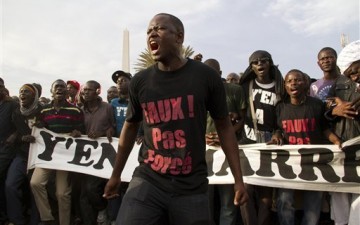
It is 2012, the third year of the annual Seattle Hip Hop Leadership Conference. A lot has happened in the world, and Hip Hop has played an undeniable role outside of entertainment news. Hip Hop artists in the Middle East were instrumental in spreading the energy of resistance in The Arab Spring, a youth-lead revolutionary swell of organizing, demonstrations, marches, rallies, and protests, that has shifted the political environment of the world, challenging governments in over a dozen countries in North Africa, completely overthrowing four, and inspiring & reinforcing similar movements across the globe, Occupy being one of them. It’s no surprise that in this context, the US government, as well as governments in Europe have ramped up the usage of Hip Hop in their foreign policy. (AP Photo of protests in Dakar, click "Y'en A Marre & Elections in Senegal" on AfricanHipHop.com to learn more)

Luckily Hip Hop doesn’t belong to any government anymore than it belongs to corporations. Hip Hop belongs to communities, and intrinsic in its cultural and artistic heritage is its drive to challenge, innovate, galvanize, and empower. But different artists, academics, bloggers, organizers, activists, veterans, youth, patrons, and supporters from different circles, industries, elements, subdivisions, businesses, and crews have vastly different perspectives on what their personal relationship to Hip Hop means in the context of culture and community, especially in our cozy corner on the tip of the West Coast. Here lies the strength and challenge of the 2012 Seattle Hip Hop Leadership Conference, which brought together approximately 200 people from all over the city. One question that arose and remains is: Who among us is willing to answer the call for social accountability and collective action, and who is here just to rap?

“Hip Hop: Tool, Toy or Weapon?” was the fitting title of the opening plenary, and it featured a star-studded cast of Jake One, Njuguna of the Physics, Dj Hyphen, General Wojack, Moorpheus Magnetic, Redskin, Larry Mizell, Toyia Taylor, Emilio, & DJ Infared. Due to a delayed start, we didn’t get much farther than introductions, but hearing such a diverse group speak on how Hip Hop has evolved and their story with it is always enlightening and highly relatable. The role of Hip Hop in personal identity development was a recurring theme. A highlight was Toyia, who emphasized the power of Hip Hop in connecting to young people and the nature of it to “encourage the evolution of every single generation.” Kawan of Sweatshopfreelife captured this footage of the panel.This sentiment was an apt transition to the next session I hit up.

“Hip Hop & the Art of Critical Pedagogy” was a smaller workgroup featuring Jose “DJ Luvva J”, Third Andresen, Cochise “Chief” Moore, Stephany Koch Hazelrigg, Max Hunter, Wyking, and several students from UW and SCCC. The dialogue explored Hip Hop as a collective approach to education, community building, social change, and personal transformation. At the same time, Rahwa of Hidmo did a presentation called "Hip Hop World Order." Thanks Sweatshopfreelife for capturing this footage of the workshop. There are three parts.

At lunchtime, Emily of Food Not Bombs and Kawan surprised attendees, coming through with delicious hot vegetarian cuisine. People continued to arrive and break bread while a number of artists took to the open mic, including J. Infinite of Umojafest P.E.A.C.E Center, and an excellent emcee duo from the Bay, The MasterS, who were in town on tour.

Energy from the lunchtime cipher flowed into the Hip Hop Occupies panel at 1:30. Featuring Maria Guillen, Gregory Lewis, Tabitha Milan, Anelise S., Henry Luke, and Matt E., the panel touched on the power of arts and culture in revolutions, the decolonization framework emerging from Occupy, movement work vs. career activism, the role Hip Hop has played thus far in the movement, and where it is going.

After my session, I slipped late into “Art vs. Commerce”, facilitated by Sam Chesneau (and later Luvva J). This firey exchange was carried by DJ Topspin, Suntonio Bandanaz, Vitamin D, The Goodsin, Dox, David Pomeranz, E-Dawg, OC Notes, and many more. When I came in, the conversation was focused on the moral dilemmas people do or don’t/should or shouldn’t face commodifying art, the work ethic and integrity of artists, and the local industry. From there, it traveled to corporate dominance over local arts and entertainment markets, and whether or not collective action can or should be taken by the community to reclaim them. A lot of the fire of this discussion carried over to the closing plenary of the conference.

So how did we do on our mission this year? David Pomeranz, of Members Only said, "There is a community within hip hop that cares, but also a community with lack of leadership. When I go to conferences like this (which I do often) I like to walk away with tools to do what I want to do (in this case lead)." Njuguna of the Physics reflected, "The Northwest Hip Hop Leadership was an amazing event and a truly inspiring experience. I'm confident that we all came away from the event entertained, energized, and enriched. I especially appreciate the emphasis we placed on building relationships and continuing the conversations we started after the conference so that we can create results that will benefit Northwest Hip-Hop as a whole." Wyking, organizer of the conference wrote, "The essence of Hip Hop provides a model for self-determination and community building in the face of extreme adversity. Our goal now with the Umojafest P.E.A.C.E. Center is to build a sustainable model in Seattle based on the positive values of Hip Hop culture."

To bring it back around to the global movement, Pioneering Kenyan Hip LinkHop artist Kamau Ngigi, currently in Seattle, emphasized Hip Hop's universal language, saying, "Coming from Kenya, I find no culture shock as long as I link up with people in Hip Hop because we are all in the same mind set all over the world. When it comes to Hip Hop, you are never alienated." But he also made some critical observations on the difference in radical energies of the US and Africa. "Hip Hop in Africa is able to express itself freely. It is not radicalized [in the US] fully because of the corporations which put money on valueless rappers and coin it as Hip Hop. Society is confused about what Hip Hop stands for in America." Seattle, are we part of the confusion or the solution?

Wednesday, May 20, 2009

Hip Hop won't let the Malcolm X Message be Forgotten in Seattle

On Sunday, May 17th, 2009, the life and legacy of Malcolm X was commemorated in celebration of his 84th birthday at the first annual Malcolm X Day Hip-Hop Fest at Umojafest P.E.A.C.E Center. The event, keynoted by former congresswoman Cynthia McKinney and recently released activist Gerald Hankerson, was the only one in Martin Luther King Jr. County that honored the often misunderstood and misrepresented human rights leader. Almost 300 people from Seattle to Oakland and all points in between came out to get down with a healthy dose of education, entertainment, and political empowerment.This free, all-day, all-ages event featured speakers, workshops, food, live performances, networking, and children’s activities that lit up the corner of 24th Ave & Spring Street in Seattle’s Central District.


Malcolm X’s teachings provided the blueprint for three break-out work sessions that kicked the day off. Facilitators used his themes of community self-empowerment through education, positive service, and political and economic awareness to guide discussions on local issues such as youth violence prevention, media justice, the upcoming city and county elections. “Malcolm X provided invaluable jewels by letting us know: ‘We must understand the politics of our community and we must know what politics are supposed to produce,” said event visionary Wyking, “We must know what part politics play in our lives, and until we become politically mature, we will always be mislead, lead astray, or deceived .”

The education workshop, facilitated by Monika Mathews of the NIA center, focused community-based education including home schooling and learning centers with culturally relevant learning environments. The economics workshop, facilitated by Shamako Noble of the Hip Hop Congress and Khep Ra Ptah of the Got Green Project layed out a Hip-Hop cluster economic model that includes revenue streams from entertainment, education/youth programs and non-profit/community development sectors and also addressed the opportunities to participate in the Green Economy as a pathway out of poverty.
The politics workshop lead by Omari Tahir and Kenyatto Amen of the Hip Hop Coffee Shop framed politics as “decision making” and the theme was “either you’re at the table eating…or you are on the menu to be eaten.” Participants worked on practical strategies for improving political leverage in the community, and next steps, including canvassing the community, holding candidate forums so that candidates can speak directly to our issues, and running our own candidates to represent our interests.

Gerald Hankerson, highlighted the power of an organized voting bloc in close elections, a theme that Malcolm X spoke on in his famous “Ballot or The Bullet” speech. He also reminded the crowd that we can’t forget the members of our community that are still incarcerated and must create opportunities for them to be productive when they come back to the community namely access to housing and jobs. The keynote was given by former congresswoman and human rights advocate Cynthia McKinney. McKinney reported on her humanitarian aid trip to Gaza to deliver medical supplies in which her boat was attacked and nearly sunk by Israeli warships. She emphasized the importance of staying engaged in shaping our world, and that it can’t be taken on face value that people who may look like you will represent your interests.

Hip Hop artists from Seattle, Portland and the bay area came out to rep for Malcolm, healing and building the hood, including Lil T-Kid Maine One(Self Tightld), De.Ale of DMS fame, Maineak B of Stahi Bros, Jus Moni, Black Stax (Silent Lambs Project feat. Felicia Loud), M.Famous, Black Aries (Yirim Seck & LaRue), K.H.M.E.T., Thee Satisfaction, Razpy feat. Angel Mitchell, Shamako Noble, Ouwar Arunga, Seazonz (Oakland/Green For All) and even young Jah Jigga got up and represented for the children. Representatives from South Seattle Community College Black Student Union, Global Fam of Portland, Million Family Task Force of Portland, L.I.F.E. program (Tacoma), 206 Zulu, B-Girl Media, Hidmo, Block Teamsters Union, Common Ground, were present, and even mayoral candidate James Donaldson showed up too.


Photos for this article were pulled from the Umojafest P.E.A.C.E Center Facebook Group. Click on the links below for video of the event edited by Notyer Average!

Malcolm X Hip Hop Conference Pt. 1
Malcolm X Hip Hop Conference Pt. 2
Malcolm X Hip Hop Conference Pt. 3
Malcolm X Hip Hop Conference Pt. 4

Monday, May 18, 2009

A Broken Network Can’t Pull it Together: Why our Youth are Killing Each Other

Hip Hop, if we’re serious about saving young lives, it will take more than a superficial “Stop the Violence” campaign. On a policy level, the fragmented approach to serving vulnerable youth is wrong. While cities and law enforcement, states, and school districts collaborate in the identification, tracking, and targeting of these youth (through free lunch programs, test scores, and gang databases), they have shown a consistent unwillingness to apply the same collaborative efforts toward providing real solutions. We cannot tell the youth “Stop the Violence,” while relying on these agencies to help and heal them, especially not while they are closing our schools, mismanaging our youth service funding, and building a new jail.

“They don’t care about kids of color; they don’t care about poor kids. They don’t care about anyone who’s different than somebody who makes $75,000 or more a year.” These were the words of NAACP Seattle President James Bible after being removed from a Seattle School District school closure hearing. View the rest of his impromptu speech on the video here. Mr. Bible’s frustration was shared by a packed room of others who challenged the sincerity and secrecy of Seattle’s recent school closure process in the midst of last year’s youth violence spike. While the district bureaucratically steered clear of accountability on the issue (they maintain they are separate from the police department and the city of Seattle), they also emphasized that the closure plan was developed based on feedback from the community.

It seems that the district either has an irresponsible disconnection from reality, or other interests to satisfy. We know that that the scores of wealthy white parents who fought against the closure of their schools had a hand in the outcome. But what about the Gates Foundation, who after postponing the renewal of grants to the district for 3.5 years, finally awarded 7.5 million after the closures were announced? This money, which could have kept the schools open and programs running at least for a while, will go to more ability tracking and testing.

Now let’s talk about the Mayor’s Youth Violence Prevention Initiative, which has also been shrouded in secrecy. The initiative allocates money to select NGOs to contract out services for youth without oversight or any specified benchmarks for tracking success. This approach is justified by a flimsy report of four model programs, but a brief inspection shows the data to be riddled with incomplete or inaccurate information. To top it off, the city has tasked the Urban League, little known for any actual work in the community, with helping to solidify its “network,” while keeping community leaders who are effectively active in the work out of the discussion. Ironically, the most critical network for violence prevention, one that places the school district, the city and law enforcement in a collective state of accountability for the safety for our children, is absent.

Unfortunately this disconnection is a convenience that youth don’t have. When the schools fail them from 9:00-3:00, and the youth initiative fails them from 3:00 to 10:00, the only thing that won’t fail is the new jail. The city is putting $110 million up for this project, plus committing another $15 mil a year for operation, which is quite an investment. Perhaps they are banking on their failure to our youth?

Whatever the case may be, it is time for us as Hip Hop artists, media producers, educators, and activists to step up, beyond the superficial message of “Stop the Violence.” We must unite, collectivize our skill sets and resources, and create an alternative solution: the seamless network, rooted in culture and community that our young people need to survive.

Thursday, March 5, 2009

Seattle Hip Hop Community Tackles Tough Issues at NW Hip Hop Leadership Conference

"Approximately 200 people came out from across the greater Seattle Area to participate in the 1st Seattle/NW Hip-Hop Leadership Council on Saturday February 28th at Seattle Central Community College," wrote Wyking, co-convener of the event, "presented by the Seattle Hip-Hop Summit Youth Council, Bush School Diversity Speaker Series, UmojaFest P.E.A.C.E. Center and Seattle Central Community College Black Student Union, the conference provided a wealth of information beginning with history and socio-cultural analysis related to the hip-hop generation." Okay, so I was only able to attend one part of one panel, but I still gotcha covered. Here are the highlights I was able to collect from the comrades. Shouts out to Suntonio Bandanaz, Rajnii Eddins, and Toni Hill for helping me piece this together. Also, be sure to check out the rest of Wyking's write-up as well. If you missed this one, don't worry. We're about to set it off at the 2009 Hip Hop Congress National Conference in Seattle, Washington with Dope Emporium, Umojafest, Hidmo, 206 Zulu and more July 29th-August 2nd! More to come.


The Hip Hop 101 presentation was led by Silver Shadow D, Rajnii Eddins, and Suntonio Bandanaz.The 206 Hip Hop vets opened the discourse with a mini open mic of sorts, with participation from one young man and two sisters in the crowd. The discussion then moved to the basics: roots of hip hop culture and violence prevention, and Universal Zulu Nation, the inception of the music industry, and the progression of the movement behind the culture. Naturally, the dialogue progressed to the domination of the corporate industry, its role in undermining the political aspects of the Hip Hop movement, and connection of such interests to Cointelpro through entities like Interscope Records and more. “We went from Fight the Power to Reclaim the Media, basically,” said Bandanaz, “to return to the founding principles within culture’s art forms.” Suntonio Bandanaz and Daichi Diaz from Alpha P also dropped by KSER 90.7 community radio in Everett for an interview on DJ Nanino’s Boombox FM later to promote their March 18th show at Studio Seven featuring Spaceman, Specs Wizard and more! Be sure to check Daichi’s new vinyl “The Fight Lullaby.”

The next panel, Hip Hop the New Face of Racism, was a community discussion, which included photographer Inye Wokoma of Ijo Arts, the conference keynote and author of How to Hustle and Win Supreme Understanding, Aisha B from Lakeside School Hip Hop Congress, Charys Bailey, Tacoma artist and youth mentor, and others.The discussion evolved to the questions, what happens when a culture becomes an industry, how does the corporate Hip Hop industry cater to white people’s perception of who Black people are, and what is the impact of that on racism and racial identity? One student spoke on how while her friends listened to conscious Hip Hop, they still had a hard time dealing with and recognizing white privilege. According to Raj, the dialogue that followed reflected personal experiences on the complexity of institutional and systemic racism and white privilege. A social worker spoke on the immense caseloads and rigorous data entry that supersedes effective service provision, a doctor spoke on the lack of people of color amongst his colleagues, a mentor spoke on how policies in youth detention centers interfere with young people’s ability to talk and internalize their experiences. Others spoke about the subtly of racism in Seattle, and the difficulty of addressing it without being labeled as an ‘anger black person.’ Supreme Understanding brought up the need to give people strategic tools and to make solutions concrete so they have practical applications in combating racism.

Rajnii also did his best to help me piece together a quick summary of the next panel, From the Hood to the Club, Violence in Hip Hop. This presentation featured Kun Luv, Omari Tahir-Garrett, Supreme Understanding, Gregory Lewis, Merciful, and Ted Evans and was moderated by Wyking. When Raj came in, Merciful was asserting the importance of addressing the root causes of youth violence, and illustrating the role police play in criminalizing and antagonizing Black youth through militarizing communities. He also spoke on young people acting out on that misplaced aggression, and how that contributes to the overall environment of the neighborhood by having communities turn in on each other. Kun Luv took issue with the claim, saying that most of the violence taking place in Seattle now comes from someone having a beef with someone specific. Kun’s basic premise was that the intentional, premeditated nature of the crimes makes youth violence not a political issue in Seattle. Omari, an unsung hero in Seattle Human Rights and Black history, smashed on this by stating, “There’s nothing going on that’s not coerced and endorsed by the state.” Tahir-Garrett grounded his assertion in his own family history and his experiences as a community organizer and activist in Seattle, which provides him a uniquely thorough understanding of public policy as offensive strategy to quash social movement. “National Security Council 46 is the new Cointelpro,” Omari said, cross-referencing the Obama adminstration’s recent restructure of the National Security Council with the Carter-administration memorandum to the Secretary of Defense and CIA on “Black Africa and the U.S. Black Movement.” Understanding the reference may be especially pertinent since the Obama administration has picked up a surprising number of our region’s slimy political leadership. Do some research. I spent 3 hours on some google ish myself after Raj gave me that quote.

"Women In Hip-Hop was a power packed panel with lively discussion facilitated by Rahwa of Hidmo," wrote Wyking, "The panel featured artist/educators/organizers Toni Hill, Khmet, Moni Tep, Monika Matthews Exective Director of the Nia Center and Life Enrichment Group, student Caela Palmer and fashion mainstay FirstLady Beunique of Presidential Clothing
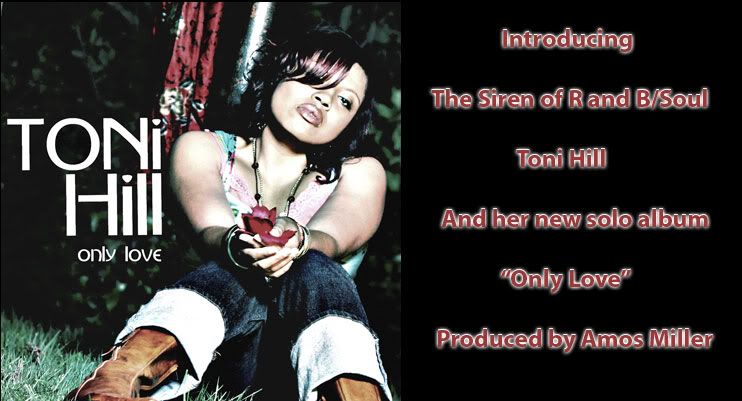
and Beunique Agency." Toni Hill told me, “The speakers on the women and hip hop panel were insightful, engaging and honest. The gift of performance that was shared before the discussion set the tone for an enriching experience and the audience participation. It was an honor to be seated in the mists of Queens and princesses. I was particularly impressed with Youth representation especially Moni Tep. She is a talented, articulate and courageous youth with infinite potential. She was an inspiration and breath of fresh air. I have spoken on numerous panels across the country, sometimes leaving with unsettling feeling that the youth voices were not properly acknowledged or that they(youth) had not absorbed the information presented by the elders because they are tired of many of the adults talking at them as opposed to with them. Rahwa did a great job moderating and I would be proud to be apart of future endeavors with this cast of brightly shining stars." Be sure to check out Toni Hill's record release party for her new album "Only Love" March 13th at Chop Suey!

There were many more panels and workshops, so again, check Wyking's write up on the event, and get ready for this summer. This year is gonna be a good one.

Monday, February 23, 2009

A Day in the Life of Hip Hop Congress West Coast: 4 States, 2 Capitols, 1 Movement

FOR IMMEDIATE RELEASE:

A Day in the Life of Hip Hop Congress West Coast: 4 States 1 Day
www.hiphopcongress.com

Brandon Green, National Contact, HHC Chief Technology Officer
(702) 606-3068 prolyphek@aol.com
DLabrie, California Contact, HHC National Outreach Coordinator
(501) 798-9610 dlabrozia2009@gmail.com
Julie Chang Schulman, Northwest Contact, HHC Northwest Regional Coordinator
(425) 223-7787 juliec@hiphopcongress.com

February 23rd, 2009

This week was a historical one for Hip Hop. Fresh off the very successful 5th Annual Hip Hop Congress Midwest Summit, which featured Little Brother at The University of Michigan Feb 6-7, and the tremendously attended 206 Zulu 5th Anniversary and Hip Hop Film Festival in Seattle, Hip Hop Congress (HHC) presented "A Day in the Life of HHC West Coast" with cultural and political activity in four states in one day including Washington, California, Oregon, and Nevada. Hip Hop Congress is confronting problems and creating solutions all while communicating in real time via blogs, email, text message and social networking sites. This is the 1st of many HHC online campaigns to come.

Early in the AM, HHC was active in the Oscar Grant rally which took place at the California Capitol Building in Sacramento which was organized as a 5 city bus caravan and included participants from various Norcal cities including Oakland, San Franciso, Richmond, East Palo Alto, and Stockton, CA. Some of the buses were sponsored by San Francisco Businessman/Rapper, JT The Bigga Figga as well as others. The Oscar Grant rally was supported by, UC Davis HHC College Chapter, Sacramento HHC Community Chapter, with members Wes Kuruhara (Chapter Head of Sacramento HHC Chapter and co-founder of San Jose State HHC College Chapter) , Sacramento Rap Crew Righteous Movement, Wyzdom of Verbal Venom & Sac Promoter Lord Vex also Gold Toes of Thizz Entertainment, Rudy Fleetwood rapper/author/ president of The United Players, Ministers Chris Muhammad and Keith Muhammad from the NOI, youth from the Muhammad University of Islam. Extended list of attendees will be available on our website. Information was coordinated by President of RonDavoux Records/National Outreach Director of HHC, DLabrie, whose album; "MR. NETW3RK" is due for release in 2009. “I asked various activists what can HHC do to help the cause without reinventing the wheel. The response I got was to help spread information to the streets, in the hood, at the colleges, and to youth through art and events. This is our strong point. We are planning a series of music compilations to inform the community about the Oscar Grant murder and speak out against Police Brutality through the voices of artists from all over the world,” says DLabrie

12 hours North, in Seattle, Washington, M1 of the legendary political rap group dead prez, who recently became the Education Coordinator for HHC along with Midwest Hip Hop Icon One Be Lo were picked up by sponsors (www.driverforhire.biz). The caravan stopped through for a tour of the Umoja P.E.A.C.E. Center (UPC) which is being developed as a community-owned Hip Hop youth center in Seattle’s Central District (CD). They were welcomed by Unite for Youth Coalition members, Seattle Rap Crew Alpha P/206 Zulu members Asun, Jerm, and Julie C, Basement TV’s Jamil and DJ Kuhnex, mother and daughter media team Maria and Imani Kang, poet Geneiva Arunga of the UPC Seattle Hip-Hop Youth Council and UPC co-founders Wyking Allah, Savior Knowledge, and Omari Tahir. Seattle youth violence is reaching critical levels, police presence is historically at its highest, public housing is being torn down, the district is shutting down schools, and money to tackle the problems are being put in the hands of poverty pimps. UPC and its vision are critical to the community reclaiming power and reasserting self-determination. “It’s good to see a center by us for us right in the hood, it’s a lot of potential in this. I’m excited to see it develop. It shows solidarity amongst many individuals and organization out here on the west, I want to take this energy back home and on the road,” stated One Be Lo. For more information on how to support UPC visit www.umojafestpeacecenter.com.


The collective then traveled to Olympia, Washington, where in 2008, Dead Prez Valentine’s Day concert attendees left a police car overturned and riot squad dispatch. One year later, M-1 was welcomed back to the Evergreen State College for a lecture and dialogue with the campus community. Tremendous efforts were made on the part of Evergreen HHC leaders and others to make this event happen. He opened his speech talking about the role of slavery in America’s system of capitalism, the country’s policy of population control, and how his personal history of community work in St. Petersberg, Florida and New York informed his understanding of activism and organizing. Turning to the role of Hip Hop in movement work, he broke down the difference between uprisings and rebellions, and emphasized that, “Revolution is an art and science. We have to be perfect.” He wrapped up the lecture by stating, “I’ve organized amongst my fellow Afrikans, the white left, we all have a place on this field, all have a role to play. Our objective is to raise the interest and agenda of the working class. Use what you have to do it. In moving forward, that’s why I’ve accepted being national spokesperson for Hip Hop Congress, to support local voices. I want to help build a social tool we can use as a weapon to defend our people’s rights.” A full write-up on the lecture and Q & A can be found on our website.

To end the days Northwest activity, HHC members traveled with One Be Lo to Portland for his performance at Berbatis Pan and linked with Vocalist/Emcee/Poet, Toni Hill of the popular group Siren’s Echo, whose new album “Only Love” will be released March 13th, and HHC Artist/founder of Global Fam, Portland HHC Community Chapter Head Mic Crenshaw who recently released his album "Thinking Out Loud.” The following day, Crenshaw hosted an HHC meeting at his home to talk about current struggles, strategies, challenges, next steps, and planning for the upcoming 2009 Hip Hop Congress National Conference. “It’s critical that we keep the momentum going,” says HHC Northwest Regional Coordinator Julie C, “Now we got the campus, the real community activists, the Hip Hop educators, Universal Zulu Nation, and an incredible network of individuals, artists, and collectives on the ground. Consistent connection, communication, and coordination is all we need to make history and some real changes this summer.” You can catch Julie C’s music in the new “Knox Family E.P” from B-Girl Media.

All of this and more was covered in real time via myspace, twitter, facebook, text and email. We invited all to participate and join us in celebrating our collective power and vision by taking a stand for our community and our families, and celebrating the art and artists that bring us together. The process of keeping things organized and connected online was headed by Pro-Dash: Filmmaker, Emcee, Producer and Creator of HHC TV on you tube. Pro-Dash is currently involved with the Stop The F Street Closure Coalition. “They are creating walls between the hood and the new project which will attract tourist but keep us Vegas natives out,” states Pro-Dash. While updating HHC online info Pro-Dash spent Thursday drafting a letter to National community organizations calling for support for an organized “National Demonstration March and Sit In” on the Las Vegas Strip. The march is scheduled for April 18, 2009, which is also the weekend of the National Broadcasters Association Convention. “We feel it’s important for the West Las Vegas community and oppressed communities across the globe to stand up and be heard for economic and social justice” says Pro Dash whose song “Fresh up out the West” tackles issues in West Las Vegas.

Hip Hop Congress is a 501(c)3 Non-Profit whose mission is provide the tools, resources, and opportunities for the Hip Hop Generation to make an impact on our collective communities. Our 8th National Conference will be held in Seattle, Washington from July 29th to August 1st at the University of Washington. The theme of the conference is "This is Our Time". There will be no panels. We have partnered with Dope Emporium, Seattle's Only Hip Hop Festival, Umojafest (Seattle’s longest running African American heritage festival), Universal Zulu Nation, The Poor People’s Economic Human Rights Campaign, Iron Fist Records, Hidmo, B-Girl Media, the Seattle Youth Council, Rock Rap Entertainment, the Coalition to Protect Public Housing, Rapsessions, the Mississippi Artists and Producers Coalition, Culture Shock Camp, Umojafest P.E.A.C.E. Center, Seattle Hip Hop Youth Council, Block Teamsters Union and others to bring a conference that is about creating, and supporting leadership as well as holding leadership accountable and being accountable to ourselves. We invite ALL our chapters, artists, partners, friends and all community members to attend this historical event.

"We believe that the youth have questions that we need to answer, that artists have struggles and deserve our support, and that the community can resolve its own problems better than today's politicians and law enforcement officials acknowledge. It is time to stop talking and start doing." stated by San Jose Emcee & Co-Founder and President of Hip Hop Congress - Shamako Noble

M-1 Builds with Olympia Community on Hip Hop and Movement Strategy


Last time M-1 left the Evergreen State College campus, their transport had to drive around an overturned cop car. Check the video here!

One year after the uprising of last year’s Valentine’s day concert, M-1 of Dead Prez was welcomed back to the Evergreen State College campus for a lecture and dialogue with the campus community. It was not easy. Tremendous efforts were made on the part of Evergreen State College HHC coordinators and cultural advocates Noah Theeman-Lindberg, Marial Culter, Moya and others. However their hard work and efforts paid off, and Mutulu “M-1” Olugabala, was finally given the opportunity to dialogue with the campus community face to face. He opened his speech talking about the role of slavery in America’s system of capitalism, the country’s policy of population control, and how his personal history of community work in St. Petersberg, Florida and later in New York with the Uhuru Movement informed his understanding of activism and organizing. “Most of us have grown up without being given a history of movement. Most of us have grown up with parents telling us to go to college, without being shown the unbroken history of this kind of resistance,” he said, in reflection of his background with Uhuru. “I made the decision to go away from campus, opting for direct action like the Black Panther Party, straight to the root of the problem. As community organizers we were launching campaigns, knocking on doors, learning how to utilize propaganda, making it work, it wasn’t glamorous.” He spoke of the police abuse, tear gas on women and children, surveillance tactics, and other strategies the state employed in both Florida and NY to counteract the efforts of Uhuru’s community efforts, and how President Obama’s “community organizing background” differs in that respect. “He may have been a community organizer, but he’s not the same kind. It’s all about what community you’re organizing for. I come from the perspective of justice not reform,” he said, noting how Obama’s proposed stimulus bill won’t even touch the working class community. “We called Obama’s campaign, ‘the candidacy to save imperialism’,” he laughed later during Q&A’s.

Mutulu then turned to the question of the cultural significance of hip hop. “I saw it right here on this campus in action that night,” he said, “We came here to do a show, we were excited, the crowd showed up ready, charged up, it was a glorious concert, ended on high note, we were left with fantastic images, felt motivation, and inspiration, and I remember at one point, someone tapped my shoulder and said, ‘Man you should look out the front door.’” The last comment drew gales of laughter from the crowd, as M said, “It took me back to St. Petersburg. Stic, Umi, and I, we looked and we saw courage, saw injustice, saw it grow, and saw people who needed to resolve it right now.” He explained how that night, DJ Umi and dead prez stayed and watched the uprising, keeping it one phone call distance away, and broke down his analysis from the perspective of an organizer. “The first question was one, did we get justice, not just recital and romanticism, I mean did we get it? and two, what’s the difference between an uprising and rebellion? An uprising is reactionary; a rebellion has goals, objectives, and strategies. What’s the real war? That’s my mind frame.” Mutulu said that as the news began rolling in from the media that dead prez started a riot at Evergreen, he feared for the campus’s ability to use Hip Hop to organize again. “That does our movement no good, it paralyzes our ability to operate,” he said. “The history of resistance in this area is phenomenal. I know the orbs, symbols I’m seeing around here, let’s hook it up y’all.”

But Mutulu, whose name means to show the path, reminds us that as an army, we need to be calculated. “Revolution is an art and science we have to perfect,” he says, “I’ve organized amongst my fellow Afrikans, the white left, we all have a place on this field, all have a role to play. Our objective is to raise the interest and agenda of the working class. Use what you have to do it. In moving forward, that’s why I’ve accepted being national spokesperson for Hip Hop Congress, to support local voices. I want to help build a social tool we can use as a weapon to defend our people’s rights.” He acknowledged how Wyking, Umojafest P.E.A.C.E Center cofounder defends the people’s rights in Seattle’s Central District, and took a moment to remember Tyrone Love, a young promoter who was killed several nights earlier in the CD. For M, the aim is to connect these energies and keep it building to strengthen the movement.

Q&A Summary:
1) Do you believe in nonviolent revolution?

Summarized Response: There's a possibility only if oppressors want to peacefully resolve. You either plead for the system to change itself or know that the only way out is to amass power and bargain it. I’ll do anything to make it happen because the system will do anything to stop you. It's the oppositions decision whether its peaceful.

2) How do we organize sustainably?

Summarized Response: Create organizations that are autonomous, so that you can move inside and out. Revolutionary organizations and institutions should be training mechanism to create revolutionaries everywhere.

3) What are the roles of smaller groups/crew in the movement?

Summarized Response: The members’ purposes have to be the same. I think it's great for morale, but what I've found is that the people are our greatest resource no matter where we are. If you don’t rely on that, you lose your ability to move. Like the MOVE Organization, when police bombed them it was easy to convince others they were dangerous because they kept to themselves. Crew is important but the greatest resource is the people.

4) In referring to organized protests in Olympia, where individual acts of vandalism offset overall message of the movement, what u do with those “brick throwers” who are a part of the movement as well?

Summarized Response: Ultimately it doesn't serve in the interest of our movement when that stuff happens. You have to identify those types of individuals as agent provocateurs. Even if it’s unintentional, you move as agent of the state even if you don't mean to. Those individuals must rectify it with the people. I have done this, I was 19 and impatient, I'm 36 today. We did something stupid. We called police on our own event. I was convinced it would cause the confrontation we wanted. I was wrong.

5) What is connecting really look like? What is the more proactive approach? How do we know what’s real?

Summarized Response: We struggle with that. It’s not easy because we’ve been taught to be separate, especially in artist communities. I just came back from Houston, I saw the worst crabs in a barrel. People don't want unity. I connected by going and being folks, I tried becoming that connector. Mutulu means to show people the path. True is one on one without media dialogue, and there are plenty of ways to set it up. What are we willing to do to get peace? I know some folks with careers around political prisoners and no intention to free them. That ain’t real. It’s about returning power to an African progressive community. Just ask yourself in whatever given group, what’s the goal?

6) What websites or groups/organizations can we use to sharpen ourselves?

Summarized Response: I say it's easy the Internet, uhurumovement.org, hiphopcongress.com, we can turn twitter and facebook into our own movement.

7) I’ve been told that having a Hip Hop Congress Chapter at Evergreen is cultural appropriation of Hip Hop because it’s predominantly white. Can you comment on that?

Summarized Response: Be mindful, Hip Hop is from Afrikan people, but it doesn't mean only Afrikans can be involved in it. Just recognize the root of the culture, and how we can empower it. If you leave Africa out, you relinquish power in the world, that’s why Europe and all these nations got their hands all over Africa they know that, but it’s true in everything. I have no problem with white rappers. Although, I’d like to see white rappers give a moment to ask permission of the ancestors, but it's cool. It strengthens the real movement. We can literally control this hundred million dollar industry.

8) Do you have suggestions to reverse damage done to youth in schools?

Summarized Response: Independent charter schools, community control over education.

9) Why did some Hip Hop artists endorse Obama?

Summarized Response: Opportunism in most rappers. We called candidacy to save imperialism. The middle class agenda elected Obama. Rappers, many of them blow with the wind. Not me, I'm anchored in the movement.

This event at Evergreen State College was a part of Hip Hop Congress's Day in the West Coast: 4 cities in 1 Day. More to come. Hip Hop Congress 2009 National Congress is in Seattle Washington July 29th-August 1st.