Wednesday, August 22, 2012

Hip Hop at Hempfest 2012

Hella People.
If you're not hip to Seattle's legendary Hempfest, it's only the world's LARGEST Cannibus Culture celebration/protestival EVER, and since it's humble local beginnings in 1991, under constant attack from all municipal angles, it has managed to not only survive but grow and thrive, all while perserving its roots as an all-volunteer, utterly organic community effort in innovative resistance.  


Hempfest's continual success draws tens of thousands of people from all over the world to Myrtle Edwards Park on Seattle's waterfront each summer, making its"Share Parker Memorial Mainstage" a coveted venue for any artist to rock. Thus, I was honored to be a part of the Hempfest 21st year celebration last Sunday, and ecstatic to share the stage with some of my favorite people: Sista Hailstorm, Suntonio Bandanaz, DJ Seabefore and Daisy Chain. It was a beautiful day! Check out the footage below, courtesy of Ready Roxx Media, to see some of the action:


So in acknowledgement of the folks that got us there and that held it down, big ups to Jim Goettler (the permit guru of Seattle), Vivian McPeak (Hempfest founder and executive director, be sure to check out his book Protestival: A 20 Year Retrospective of Seattle Hempfest), Levi Lyon (LyonPride Music, Hempfest entertainment committee organizer, and golf cart crowd-navigation extraordinaire), and of course to the countless other Hempfest organizers and volunteers, all of whose combined efforts make this possible year after year. You guys are amazing. I also want to shout out 206 Zulu's King Khazm Jocie Luv, Jessica Diaz, DJ Audeos of Crisis Clothing NW, Hollis of Hollis Photography & Ian Wiggers of Everything Rap Bremerton, DeRox of Ready Roxx Media, Heidi Jackson, Nicodemus, Korvus Blackbird, Jai Bird, Zaim, Charys, Lingda, Daway, CB3, Felisha, Josh Rizeberg, Matt E., Rufio of Ruf-Top Productions and all our other official and unofficial sponsors, endorsers, homies, and fam who came out and supported us on Sunday. Also shouts to Potluck, Jay Barz, Funky 2 Death, Kokane, Traffik, and Goodybagg featuring the amazing Olisa "Spyc-E" Enrico, always a pleasure to see her murder it up there. The lineup was heater. 

The Random Bonus Editorial "Hip Hop at Hempfest"

Context: I was asked by Vivian to write a few words on this topic that might help fill potential social or generational gaps in understanding between diverse groups of cannabis advocates. I found this to be a fun and challenging exercise on a few different levels, but I was happy and honored that the result was printed in this year's program. In case you didn't catch it and are curious, here it is. Excuse the corny ending:


"Rap music and weed-smoking has long been linked in the mainstream consciousness. Unfortunately, this association often paints an inauthentic (or at the best, incomplete) picture of both Hip Hop and cannabis culture. The synergy between the two is deeper than the glorification of blunts and a few contagious marijuana anthems.

Cannabis repression is rooted in colonization, racism, state-instituted socioeconomic violence and the oppression of common people. It is from these very forces that Hip Hop emerged as reclamation of space, voice, autonomy, & freedom of expression. The cultural legacy of Hip Hop, like that of jazz, blues, and reggae, is creative resistance, and this collective memory is transmitted through the artistic practices of tried & true DJs, b-boys/girls, graffiti writers, & emcees. That’s why Afrika Baamaataa, Godfather of Hip Hop Culture, cited “knowledge” as the 5th element of Hip Hop way back in 1973, when he unified street tribes of youth in NYC by founding Universal Zulu Nation.  

Hip Hop is of the struggle, of the movement, and most importantly, of community. Despite what you see in the mainstream, it’s not just another product you consume from corporate media or an image to be bought /sold.  It’s a vast & diverse network of amazing creators in your city you should get to know  & support as we continue to build the 21-year-Hempfest Protestival community of resistance.

This year at the Hip Hop Review, acts such as Sista Hailstorm, Suntonio Bandanaz, & DJ Seabefore not only exemplify artistic excellence on the stage. They actively work every day ground-level with youth, families, and grassroots organizations to embody the message in the music. That’s real Hip Hop. So whether you already knew or want to learn, whether you’re looking for those true school breaks or hood slaps, or whether you just want to kick back to an incredible soundtrack, join us for our Sunday lineup. I got 5 on it you’ll be glad you did."


Leilani, Hailstorm, Bandanaz, Jules C Before the Set

Merch Table Set Up


Ready Ready!

Golf Cart There

Golf Cart Back
Daisy Chain, Hailstorm, Cheeks, Ilyana

The one and only!
Heidi, Joc, Khazm

Bandanaz and Hailstorm Rocking
Bandanaz Goes Maniacal

B-Boy Zaim, youngest member of Alpha P Goes Maniacal


Merch Table in Full Effect


Hailstorm and Rufio

Seabefore, Hailstorm, Homie
Good times.


Until next time, stay up! Drop a comment on the blog. 


Monday, February 27, 2012

What is Hip Hop Leadership?

A writeup on Seattle's conference, and some more thoughts.

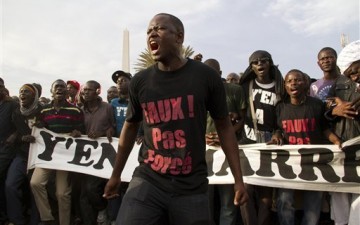
It is 2012, the third year of the annual Seattle Hip Hop Leadership Conference. A lot has happened in the world, and Hip Hop has played an undeniable role outside of entertainment news. Hip Hop artists in the Middle East were instrumental in spreading the energy of resistance in The Arab Spring, a youth-lead revolutionary swell of organizing, demonstrations, marches, rallies, and protests, that has shifted the political environment of the world, challenging governments in over a dozen countries in North Africa, completely overthrowing four, and inspiring & reinforcing similar movements across the globe, Occupy being one of them. It’s no surprise that in this context, the US government, as well as governments in Europe have ramped up the usage of Hip Hop in their foreign policy. (AP Photo of protests in Dakar, click "Y'en A Marre & Elections in Senegal" on AfricanHipHop.com to learn more)

Luckily Hip Hop doesn’t belong to any government anymore than it belongs to corporations. Hip Hop belongs to communities, and intrinsic in its cultural and artistic heritage is its drive to challenge, innovate, galvanize, and empower. But different artists, academics, bloggers, organizers, activists, veterans, youth, patrons, and supporters from different circles, industries, elements, subdivisions, businesses, and crews have vastly different perspectives on what their personal relationship to Hip Hop means in the context of culture and community, especially in our cozy corner on the tip of the West Coast. Here lies the strength and challenge of the 2012 Seattle Hip Hop Leadership Conference, which brought together approximately 200 people from all over the city. One question that arose and remains is: Who among us is willing to answer the call for social accountability and collective action, and who is here just to rap?

“Hip Hop: Tool, Toy or Weapon?” was the fitting title of the opening plenary, and it featured a star-studded cast of Jake One, Njuguna of the Physics, Dj Hyphen, General Wojack, Moorpheus Magnetic, Redskin, Larry Mizell, Toyia Taylor, Emilio, & DJ Infared. Due to a delayed start, we didn’t get much farther than introductions, but hearing such a diverse group speak on how Hip Hop has evolved and their story with it is always enlightening and highly relatable. The role of Hip Hop in personal identity development was a recurring theme. A highlight was Toyia, who emphasized the power of Hip Hop in connecting to young people and the nature of it to “encourage the evolution of every single generation.” Kawan of Sweatshopfreelife captured this footage of the panel.This sentiment was an apt transition to the next session I hit up.

“Hip Hop & the Art of Critical Pedagogy” was a smaller workgroup featuring Jose “DJ Luvva J”, Third Andresen, Cochise “Chief” Moore, Stephany Koch Hazelrigg, Max Hunter, Wyking, and several students from UW and SCCC. The dialogue explored Hip Hop as a collective approach to education, community building, social change, and personal transformation. At the same time, Rahwa of Hidmo did a presentation called "Hip Hop World Order." Thanks Sweatshopfreelife for capturing this footage of the workshop. There are three parts.

At lunchtime, Emily of Food Not Bombs and Kawan surprised attendees, coming through with delicious hot vegetarian cuisine. People continued to arrive and break bread while a number of artists took to the open mic, including J. Infinite of Umojafest P.E.A.C.E Center, and an excellent emcee duo from the Bay, The MasterS, who were in town on tour.

Energy from the lunchtime cipher flowed into the Hip Hop Occupies panel at 1:30. Featuring Maria Guillen, Gregory Lewis, Tabitha Milan, Anelise S., Henry Luke, and Matt E., the panel touched on the power of arts and culture in revolutions, the decolonization framework emerging from Occupy, movement work vs. career activism, the role Hip Hop has played thus far in the movement, and where it is going.

After my session, I slipped late into “Art vs. Commerce”, facilitated by Sam Chesneau (and later Luvva J). This firey exchange was carried by DJ Topspin, Suntonio Bandanaz, Vitamin D, The Goodsin, Dox, David Pomeranz, E-Dawg, OC Notes, and many more. When I came in, the conversation was focused on the moral dilemmas people do or don’t/should or shouldn’t face commodifying art, the work ethic and integrity of artists, and the local industry. From there, it traveled to corporate dominance over local arts and entertainment markets, and whether or not collective action can or should be taken by the community to reclaim them. A lot of the fire of this discussion carried over to the closing plenary of the conference.

So how did we do on our mission this year? David Pomeranz, of Members Only said, "There is a community within hip hop that cares, but also a community with lack of leadership. When I go to conferences like this (which I do often) I like to walk away with tools to do what I want to do (in this case lead)." Njuguna of the Physics reflected, "The Northwest Hip Hop Leadership was an amazing event and a truly inspiring experience. I'm confident that we all came away from the event entertained, energized, and enriched. I especially appreciate the emphasis we placed on building relationships and continuing the conversations we started after the conference so that we can create results that will benefit Northwest Hip-Hop as a whole." Wyking, organizer of the conference wrote, "The essence of Hip Hop provides a model for self-determination and community building in the face of extreme adversity. Our goal now with the Umojafest P.E.A.C.E. Center is to build a sustainable model in Seattle based on the positive values of Hip Hop culture."

To bring it back around to the global movement, Pioneering Kenyan Hip LinkHop artist Kamau Ngigi, currently in Seattle, emphasized Hip Hop's universal language, saying, "Coming from Kenya, I find no culture shock as long as I link up with people in Hip Hop because we are all in the same mind set all over the world. When it comes to Hip Hop, you are never alienated." But he also made some critical observations on the difference in radical energies of the US and Africa. "Hip Hop in Africa is able to express itself freely. It is not radicalized [in the US] fully because of the corporations which put money on valueless rappers and coin it as Hip Hop. Society is confused about what Hip Hop stands for in America." Seattle, are we part of the confusion or the solution?

Friday, August 26, 2011

On Youth Violence, Conferences, and Rap-olutionaries

Youth violence is not a new issue in King County, and prevention-focused, multi-agency public policies are not new strategies to tackle it. The earliest of such efforts I could find in this city date back to 1989, and funding for it has now, after over two decades of repackaging and rearrangement, collapsed into the Seattle Youth Violence Prevention Initiative. Still, though, the problem persists. After performing and speaking with a group of young women at Powerful Voices, whose program was funded in part by SYVPI, I began delving back into research on the politics and paper trails of youth violence prevention work, and building with a number of dedicated youth and cultural service workers from different organizations and agencies across the city. One of these people was my B-Girl Media and 206 Zulu comrade Sista Hailstorm, who was asked to speak on August 19th, 2011, at a Gang Prevention Conference organized by the City of Seattle, King County Human Services, and SU’s KC Prevention and Outreach Work Group. Finding many commonalities in the moral, cultural, political, economic, and bureaucratic challenges people with integrity face doing this work, we decided to use this event as a platform to air these issues, as well as connect with others seeking alternatives to these systems. Here’s a summary of what happened, some attendee feedback, and some expertise critique:

The first speaker was Dr. Johnny Lake, a charismatic academic and cultural awareness trainer from Oregon by way of Tennessee. He emphasized through personal narrative and anecdotal references the importance of cultivating positive, proud cultural identity and self-esteem. This was followed by the only representatives working on the ground in Seattle: the community panel of Youth 180’s Gabriel Ladd, Keenan Allen, and Sista Hailstorm.(Photo from left to right: Dr. Johnny Lake, Keenan Allen, Gabriel Ladd, Sista Hailstorm.) The Youth 180 folks spoke about their mentorship model and the importance of community-based leadership development, while Sista Hailstorm went hard on multi-generational deep systemic violence waged against marginalized communities, and importance of addressing this in a discussion on youth violence. There was much more, and the community panel was a highlight of the conference, so I urge people to check out at least this part of the audio, which should be up on SU’s Social Work website soon. The final keynote, Dr. James Garbarino, is an author and academic who testifies on behalf of inmates on death row. The data he presented included statistical, scientific, and other evidence-based support for meaningful prevention work.

So what did attendees get out of it? I asked Hassan Hassan, an independent entrepreneur who has taken on youth service in the Somali and African youth community as a dedicated volunteer. “The conference had good intentions,” he said, “but I feel they missed the target when it came to interacting with us as local community grassroots representatives, to listen to our needs and perspectives.” Dione Johnson, co-director of the Multi-Media Center, a youth-led media literacy and production resource network echoed this sentiment saying, “The conference could have done a better job of inviting community organizations on the ground doing the work, but I liked how the panelists that were there did draw on positive models. We need more purpose-driven programming in contrast to violence-focused programming, because we need to call into being what we want.” She also pointed out the lack of youth participants, stressing that, “If we keep leaving young people out of the conversation, we are going to keep having the problem.” Liz Ali, who started Mother’s Outreach Movement, a woman-centered community support network, in 2008 after her son PJ was killed said, “I liked how relationships and culture were emphasized by presenters, and I appreciated Keenan on the panel giving his perspective as a youth touched by violence that has turned that around. I would have liked to see more youth participants.” (*See video footnote at the bottom of this article for youth perspectives!)

For an out-of-town, expertise perspective, I hit up Aquil Basheer of Maximum Force in LA, a former Black Panther with 35 years of violence prevention work under his belt. Too often, he said, such conferences are filled with empty rhetoric: “We rap-olutionaries, as opposed to revolutionaries, we like to hear ourselves talk. We got to stop talking so much and start bringing real measurables and deliverables to the table.” To accomplish these ends, Basheer emphasized the importance of community involvement in the planning stages of such events saying, “Before you do any conference, you need to get a specific needs list from the people on bottom up perspective so you can come with a blueprint to move forward. When we’re at the conference, we have to make sure we’re leaving with a time-oriented plan, a 5, 10, 15 point bullet-hit list of instructions and specific action items so we leave out the room with solutions and answers.”

With the plethora of youth initiatives currently on the table, including Seattle Youth Violence Prevention Initiative, the Seattle University Youth Initiative, the King County Sheriff Office Gang Intervention Initiative, and the King County Juvenile Justice Initiative, it would seem there are ample resources to accomplish this task. But if communities are not authentically aware of or engaged in the process, the results will not be consistent, sustainable, or transformative in the lives of our youth.

As a final ironic point in this conversation about violence and violence prevention, it should be noted that the hosting institution, Seattle University, has a president who was reportedly complicit by omission in the perpetuation of abuse to a whole Native community in Alaska. The story is here, and I could not do this report-back without pointing this out, as systemic violence and abuse and its impact should not be neglected, and settlement in the court of law does and should not equate dismissal in the court of public opinion. This is why as youth service workers seek to reform and adapt the existing service structure, we should, as a community, seek to create self-reliant solutions outside of the system that created these cycles.

In closing, I’d like to acknowledge Tanya Kim, from the City of Seattle for working to bring us to this table, and I hope that in the future, our new coalition of community-rooted youth and cultural services workers can help bridge the conference/community/youth divide.

(*Video footnote)
Since much of the feedback from attendees included wanting more youth perspective, my Project Mayhem/Think Tank brother Mic Flont, emcee from the group Waves of the Mind, offered to gather some brief interviews from his students in Katalyst, a Hip Hop & Social Justice youth education program housed in WAPI. He asked youth of different ages, genders, areas, and backgrounds three questions, and we uploaded it to Youtube. Here is the footage:


For more information about any mentioned people or organizations, or to find out how to get involved, email juliec.206@gmail.com.

Tuesday, July 26, 2011

Jewels Hunter- Moment in Time

Check my very dear friend, Jewels Hunter's BRAND NEW long-awaited release!

Thursday, July 7, 2011

Natural Causes Tour Coming to Blend w/Seattle Hip Hop Scene


Peace folks! So it's no secret I been dragging on the blog lately, but I am happy to report lots of listens for my new EP Sliding Scale, and I hope yall will continue to check that out, download, donate, and share with friends! It'd pressure on season! So speaking of which, I got like 8 million shows coming up in July (Check my bandcamp for those dates!), it's like I'm doing a tour in my own city hahaha, BUT there's only ONE that there's a press release for (thank Sir Doxington of Greg and Jerome for that, y'all) so I figured I'd post it up for y'all to read and enjoy. Come through, it's gonna crack off.


For Immediate Release: July 7th, 2011
gregandjerome@gmail.com
http://mikeeagle.net

Natural Causes Tour Coming to Blend w/ Seattle Hip Hop Scene
Next Generation of LA Underground Legends Joins Northwest Artists at Chop Suey

Los Angeles's favorite Hip Hop agitators, next generation of underground legends, and purveyors of the seductively sarcastic non-genre of "art rap" are topping off their Natural Causes tour with a well-anticipated stop at Chop Suey in Seattle, Washington. Hosted by the NO FILLER Presents event collective, Open Mike Eagle, Redd Foxx (Alpha MC & VerBS), and Los Feo Faces will be joined July 21st with Seattle artists Julie C, Graves 33, Three Ninjas & Tangentbot, and Greg & Jerome, for an explosive evening of Hip Hop merriment and wonder.

Headlining the tour is Open Mike Eagle, of the pioneering LA Hip Hop crew Project Blowed, an artist poised to become a movement in his own right, as a voracious lyricist and co-founder of the pivotal Thirsty Fish and the Swim Team crews. His new LP "Rappers Will Die of Natural Causes", released this June, is a testimony to his originality, vision, and domineering mic presence. Joining him on tour is Redd Foxx, a duo consisting of Alpha MC & VerBS, two of Los Angeles's hardest working emcees, also of Swim Team and Hellfyre Club, and artists from Los Feo Faces, another hard-hitting emcee powerhouse featuring a roster that stretches from Hawaii, through Texas, Colorado, Cali and back. The Seattle welcoming committee consists of Julie C, first lady of the legendary Alpha P crew, the 206's favorite renaissance man, Graves 33, the cloaked crusaders Greg & Jerome, and the mysterious Three Ninjas & Tangentbot.

The night will be a promising blend of two scenes, sprinkled with some extra surprises and titillating secret special guests. Open Mike Eagle said, "I always look forward to playing Seattle. It's one of the last outposts in the war on mediocre music. It's certainly the Capital of the miraculous rap forest that is the Pacific Northwest."

Check out the promotional video for the "Rappers Will Die of Natural Causes" LP here:


Event Information:
Thursday, July 21st, 2011- SEATTLE, WA
Natural Causes Tour @ Chop Suey
1325 E. Madison Street
8pm - $7 - 21+ (Presale available)

Tuesday, June 7, 2011

DOWNLOAD MY EP SLIDING SCALE

I know I know, I've totally fallen off my blogging game these past few months, but check it out. I DROPPED AN EP! I had a BLAST at the record release at the epic Stop Bitin' at Lofi on May 31st, and I wanna give big ups to everyone involved. (I will list in an edit!) For now, download THIS. NOW. Did I mention it's FREE? Unless you wanna donate ;)


Tuesday, March 8, 2011

How Can Hip Hop Save the World? Lessons from a Seattle Youth Service Scandal

On March 3rd, I was invited to speak at an intimate panel at Seattle University called "How Can Hip Hop Save the World?" The gathering, brought together by SU's Mary Pauline Diaz, featured Mako Fitts, Ready C from my crew Alpha P, and myself, as well as about 10 student participants. I didn't know what to expect, but I was inspired by the topic, ensuing conversation, and current events to write this article up.

(Photo: Kool Herc, founder of Hip Hop, currently fighting the American healthcare system.)

Before addressing how Hip Hop can save the world, you first have to determine whether it can, and what "Hip Hop" means to begin with. Now although we could debate cultural memory, nommo, and collective experience all day, the truth is that the only thing that brings most of us together under the umbrella of "Hip Hop" is that we, as artists, engage in the artistic practices deemed by Afrika Bambaataa to be the elements of Hip Hop: bboy/girling, emceeing, graffiti, Djing, beat-making, etc. Of course cultural production in Hip Hop is not just limited to that, it also includes secondary extensions of this. For example, independent media/websites/shows such as Seaspot, Flava News, Coolout Network, Untappedmuzik, All Power to the Positive, Seattle Hip Hop Street Fights, Street Sounds, Boombox FM, She Ready Radio, and Zulu Radio are included here as well as bloggers like those at Raindrophustla, Chul Gugich from 206up, Hugh from Blogsiswatching.com, and Miss Casey Carter, writers like Marian Liu and Jonathan Cunningham, even online forum mafiosos like the habitue of 206Proof are Hip Hop cultural producers. Promoters/venues/functions are also hugely important to Hip Hop cultural production (think Dope Emporium, UmojaFest, Obese Productions, an institution like Stop Biting at Lofi (shouts to Introcut), or Ladies First, formally at Hidmo, etc.) Extending even farther out, we can include fashion (think Mint Factory Clothing or CrisisNW Gear), photography (like Ruf Top Productions, and Jennifer Mary), and a plethora of others. Through this lens, Hip Hop CREATES communities around these artistic practices and acts of cultural production. The question then shifts from "Can Hip Hop save the world?" to "Can communities save the world?" and of course, the answer here is yes. But what role does Hip Hop have in this?

As an artist, and like a lot of artists and cultural producers out here in the Northwest Hip Hop scene, I believe in community accountability to the youth. We do not just understand and create art about issues of gentrification, poverty/job creation, educational reform, healthcare, and youth violence prevention, we organize and mobilize for positive changes within our spheres of influence around these issues, for their benefit. I've worked with organizations who turn crack houses into community centers and throw Hip Hop Leadership Conferences (Seattle Hip Hop Youth Council & Umojafest P.E.A.C.E. Center), organizations who connect artists with schools, play cafeterias and gymnasiums, and organize city-wide Youth Summits (206 Zulu), collectives who throw multi-day free all-ages Hip Hop festivals with youth showcases (Dope Emporium), business owners who turn their restaurants into activists hubs and performance spaces, who launch community empowerment projects (Hidmo), and I've been blessed to connect with other collectives, organizations, and crews in cities across the country who share the same priorities and mission in this work. (Shouts to DeBug in San Jose, W.I.T in Kentucky, J.U.I.C.E and GorillaMic in Los Angeles, IMAN & Coalition to Protect Public Housing in Chicago, B Girl Be in Minneapolis, W.E.A.P in Oakland, and all trues in the PPEHRC, UZN, HHC networks). There's power in this groundswell.

Through my travels, connecting with "Hip Hop" communities across the country, I've also learned that the national policies and initiatives enacted locally on a state, county, & city level have created common struggles & challenges for us. Broadening our perspective on these issues to include the struggles of communities outside our scene allows us to see how these issues manifest in different cities, and facilitates better understanding on how we can enact change in Seattle. One example of this is HUD Block Grants that wiped out public housing in virtually every urban community across the country, shrouding the reality of gentrification and urban economic displacement under the guise of "private-public partnerships". Another very recent example is the Youth Violence Prevention Initiative (YVPI). Most don't know that at the time this was launched in Seattle two years ago, former Mayor Nickels was the President of the National Council of Mayors, and it's not a stretch to say his decision to entrust the Seattle Urban League with a no-bid multi-million dollar grant for executing the project locally was in no small part due to the "New Deal" partnership for the Conference of Mayors and the National Urban League announced at their centennial celebration.

Two years ago, at the time this happened, I was working with Umojafest P.E.A.C.E Center, Mother's Outreach Movement, Hip Hop Congress, and a collective of over 20 other local Hip Hop and youth advocacy organizations in the Unite for Youth Coalition, who were very much in the trenches of youth violence prevention work. The coalition members were also very concerned with the city's move to hand these desperately needed funds over to the Urban League, an organization with questionable leadership, a history of unsavory community appropriation, and virtually no track record of notable violence prevention work. Plus at the same time, the city of Seattle was proposing to build a $110 million dollar jail, and the new Seattle School District Superintendent Maria Goodloe-Johnson (who was just fired March 3rd by the school board over the recent scandal) was proposing to shut down six schools. We organized, and began contacting people in the mayor's office, on the school board, and in the Urban League, and our concern only grew. As community organizers and youth service workers, we were uncomfortable with 1) the disconnect of these conversations 2) the Seattle School District's questionable management of public funds and their inability to keep schools open 3) the lack of transparency, really the shroud of secrecy over the Urban League's plans for the violence prevention money. Two years ago, we staged demonstrations, put out articles on the issue, and did our best to engage our communities in the conversation, for the interest of the youth. Were we successful in raising awareness and asking questions? Yes. Were we able to prevent the scandalous debacle that ensued? No.

Today, two years later, after at least four schools are closed, the Seattle Times front page is riddled with stories about the Seattle School District's financial scandal, how over a million dollars was handed over to vendors that never did anything but get the money, and how the single largest recipient of that money was the Seattle Urban League. This all came out after the Urban League quietly lost the YVPI contract in January, after they spent $900,000 with little to show for it. (Here's the city's performance evaluation for the larger half of that amount). I'd be interested to hear how this played out in other cities.

Despite all this, ours was not a lost battle. Quite the contrary, the pressure and spotlight put on Former Mayor Nickels and his administration came right before elections season. Hip Hop ran its own candidate, Wyking Garrett, for the purposes of putting these and other critical issues on the table, and coalitions of urban youth organizations like the Young Voter's League were hosting their own candidate forums at which Nickels was virtually absent. Although Wyking lost in primaries, the face time we bought with other candidates won us a huge platform to educate others on what was going on in the community, and it was out of these conversations that Mayor McGinn surfaced as a favored pick among young voters. It is the presence of this new mayor which has eventually lead to the space for transparency in the YVPI, as well as for new leadership to emerge from the community. We should not forget or downplay this victory, even if it did take some time, but we should also strive to mobilize quicker, stronger, and more effectively next time by taking key lessons from what went down in our own backyard:

1) Be proactive in creating and/or contributing to the growth of institutional alternatives to the status quo. (Instead of trying to use the master's tools to dismantle the plantation. This applies to the dying music industry & corporate media model as well as activism and youth service.)

2) Leverage the political process by running our own Hip Hop candidates who will put our issues and interests into the forefront. (Instead of raking up election year funding by remaining operatives for existing political parties.)

3) Keep building Hip Hop as an effective medium for community education and mobilization.
(Think unionizing teaching artists and Hip Hop youth service workers, building coalitions between our businesses, collectives, and organizations, and creating "rapid response" networks on youth policy issues among our independent media outlets.)

Hip Hop is a vast & powerful network. We should not shy away from being active in changing the world from the ground up. The above is only one example of the small atrocities committed daily, and the role our community of cultural producers can and needs to play in intervening and recreating. Even here in our seemingly isolated, burgeoning scene, we are a part of a larger movement with larger aspirations, and there are many reminders of this. (Take our comrades in the Hip Hop communities of North Africa for example). There's a lot of answers to the question "How Can Hip Hop Save the World?", but the most important answer is in the alignment of all our efforts and the clarity of our collective vision.

Julie C is a teacher, cultural advocate, and emcee. Her upcoming E.P Sliding Scale is dropping May 2011 from the indy label B Girl Media. Email her at Juliec@hiphopcongress.com, and comment on this story and others at www.Julie-C.com.